
What Is Wet Stacking, and How Do You Stop It?
Updated
Wet stacking is unburned fuel and carbon building up in a diesel engine's exhaust system. It happens when a diesel generator runs at a small share of its rated load for long periods, so the engine never gets hot enough to burn all of its fuel.
Why it happens
A diesel engine needs heat and cylinder pressure to burn fuel completely. At light load, combustion temperatures fall, and some fuel passes through unburned. It collects as a black, oily residue in the exhaust manifold, turbocharger and stack. Many sites run an oversized diesel, bought to cover a peak load the site rarely reaches, so it spends most of its life at a low load factor.
The warning signs
- Black, oily residue leaking from exhaust joints
- Black smoke at start-up or when load increases
- Rising fuel use for the same output
- Fouled injectors and more frequent service calls
The usual fixes, and their cost
Operators run load banks to burn the deposits off, schedule extra service visits, or accept higher fuel use and shorter engine life. Each one adds cost and a site visit.
Right-sizing removes the cause
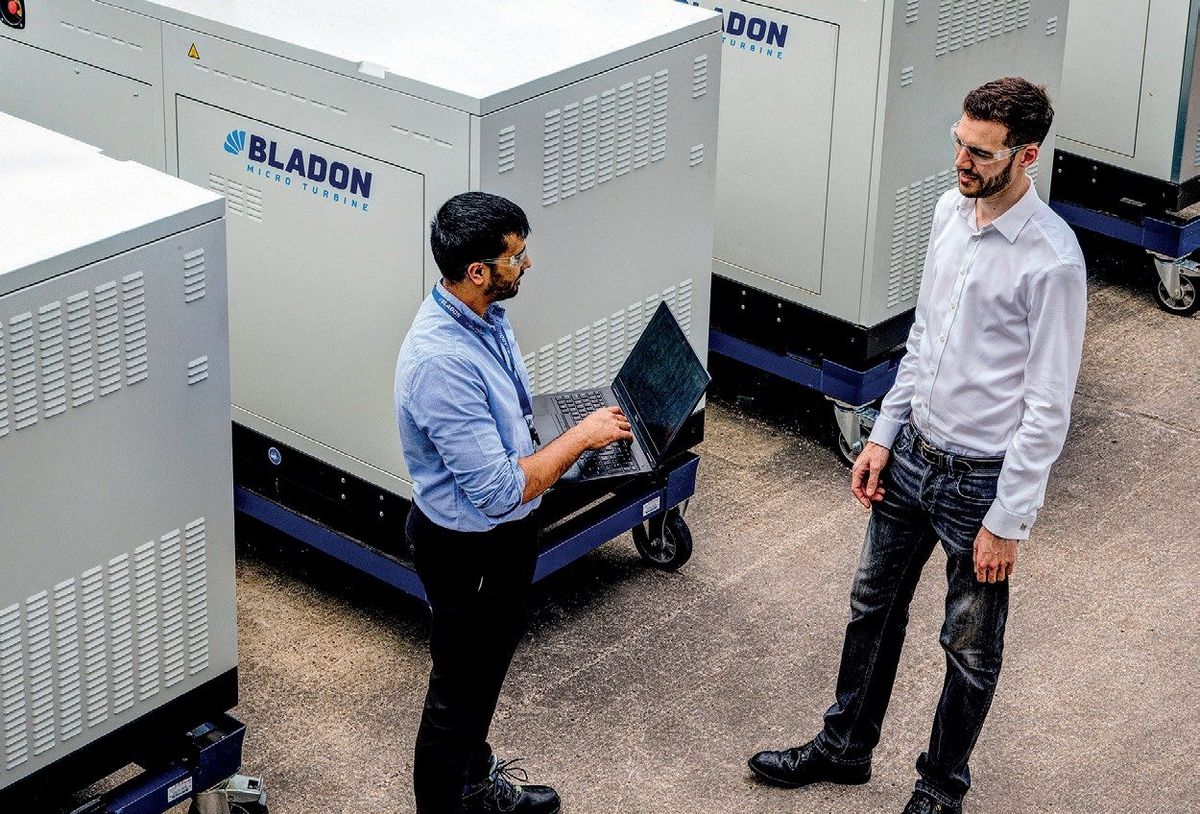
Sized to your site's load, a Bladon microturbine can burn less fuel than an oversized diesel genset running lightly loaded, which wastes fuel and fouls at low load. A Bladon microturbine runs on air bearings with no engine oil, so there is no oil to foul, and it is serviced once a year, regardless of run hours.
If your diesel runs lightly loaded, enter your real fuel use in our TCO calculator to see what right-sizing could save you.
This article is part of the Bladon archive and reflects the position at the date of publication.