
Can mini-grids or standalone power solve the telecom tower power paradox?
Metcalfe's Law says network value rises with the square of users, and more users means more power. Can renewables alone keep up at bad grid cell sites?
Metcalfe's Law holds that the value of a network rises with the square of the number of its users. It was coined to describe telephone networks, and it applies just as well to the mobile networks that succeeded them: more users on a network make that network more valuable to everyone connected to it, which in turn draws in more users, more traffic, and more services. For the operators and tower companies running the physical infrastructure behind that growth, more users has always meant one thing at the site level: more power required.
That relationship was straining at bad grid cell sites across Africa and Asia. Towers built and dimensioned for one era of traffic were being asked to support a heavier load than their designers had planned for, and the industry had to work out whether mini-grids or standalone power systems, built largely around renewables, could realistically close that gap. The following sets out the questions operators were asking, and the answers that emerged at the time.
What is pushing up power at bad grid cell sites in Africa and Asia?
The clearest driver was tower sharing. As multiple operators moved onto the same tower to share the cost of infrastructure, each additional tenant added its own equipment and its own load, typically in the range of 1 to 3 kW per tenant. A site designed for a single occupant found itself supporting two, three or more, and the arithmetic of the power budget only ever moved in one direction.
Layered on top of multi-tenancy was the steady growth in data traffic itself. More subscribers, more smartphones, and more data-hungry applications meant existing equipment worked harder even before any new radio technology was added. The combined effect of sharing and traffic growth meant that site power requirements at bad grid locations were on a firmly upward trajectory, regardless of what came next in terms of network generation.
At what level of grid quality does increased power load start to stretch currently dimensioned sites?
The answer depended heavily on how much grid support a site had in the first place. A site with a reasonably stable grid connection, even an imperfect one, had some headroom to absorb additional load before its backup systems were seriously tested. A genuinely bad grid site, one already reliant on generators or renewables for a large share of its runtime, had far less margin, because it was already close to the limit of what its installed capacity could reliably deliver.
In practice, this meant that the sites most exposed to the risk of being under-dimensioned were exactly the sites least able to absorb the consequences: those already furthest from reliable grid power, where a generator or battery bank running near its ceiling had little tolerance for an unplanned increase in load.
Are cell sites which rely on solar and hybrid systems in danger of overtopping their energy supply with expanding 4G overlay?
Yes, and this was one of the more pressing concerns for operators managing solar and hybrid sites. These systems were typically sized against the load that existed, or was forecast, at the time of installation. A 4G overlay added onto an existing 2G or 3G site introduced additional equipment and additional consumption that the original solar array and battery bank had not been designed to carry.
The result, in a meaningful number of cases, was a site where the renewable generation and storage installed a few years earlier could no longer reliably cover the load through periods of poor sunlight or high demand, forcing a greater reliance on backup generation than the site's original design had ever anticipated.
Do solarised hybrid sites need re-dimensioning, or are there limits to what cleantech energy sources can achieve?
Re-dimensioning was possible in principle, but it was not free of limits. Adding more solar panels and more battery capacity could push a site's renewable share back up, but only within the physical and commercial constraints of the site: available land or tower space for panels, the cost of additional battery capacity, and the diminishing reliability gains from adding storage to smooth out longer periods of low generation.
There was a real ceiling to what cleantech alone could deliver at a bad grid site once load rose past a certain point. Renewables' own numbers illustrated the pace of change: globally, renewables' share of primary energy consumption moved from around 12% in 2007 to only about 13.5% in 2018, according to Statista. That was a modest shift over more than a decade, and it underlined that a 100% renewable answer was not close at hand for the sector as a whole, let alone for individual high-load sites.
When 5G comes to bad grid areas of Africa, how much will this issue worsen?
5G was, on a like-for-like basis, more efficient per megabyte of data carried than previous generations of technology. But that efficiency gain was set against the GSMA's own projection of a 400% increase in data traffic by 2025, a growth rate that made any per-megabyte efficiency improvement largely irrelevant to the total power draw at a site.
In absolute terms, adding 5G equipment to an existing tower could put an additional 2 to 5 kW of load onto that site. That was a substantial increase, and one that sat outside what most existing renewable installations at bad grid sites had been sized to cover, meaning 5G rollout in these areas was likely to intensify the power gap rather than ease it.
What would an ideal energy system look like that copes with uncertainty over current and future maximum site loads?
The theme running through every part of a modern tower site was modularity. Rectifiers, batteries, solar PV arrays and 5G antennae were all supplied and installed in modular units, added incrementally as a site's needs grew. Generation was the one part of the system that, at many bad grid sites, had not followed that same modular logic, having instead been sized once against a forecast and left largely unchanged.
An ideal system would extend the same modularity to generation itself, allowing capacity to be added in step with actual, measured consumption rather than against a forecast that might prove too conservative or too generous. That approach reduced the risk of both under-provisioning, which left a site exposed during peak demand, and over-provisioning, which tied up capital in capacity that sat idle.
If the solution is a partial return to generators for primary power, how can hydrocarbon fuels be made cleaner?
Renewables were not going to disappear from the energy mix at bad grid sites, but the evidence pointed toward a hybrid answer in which generators continued to play a meaningful role, particularly where loads were high, uncertain, or growing quickly. The question this raised was how to make that generation cleaner, given the direction the industry as a whole needed to travel.
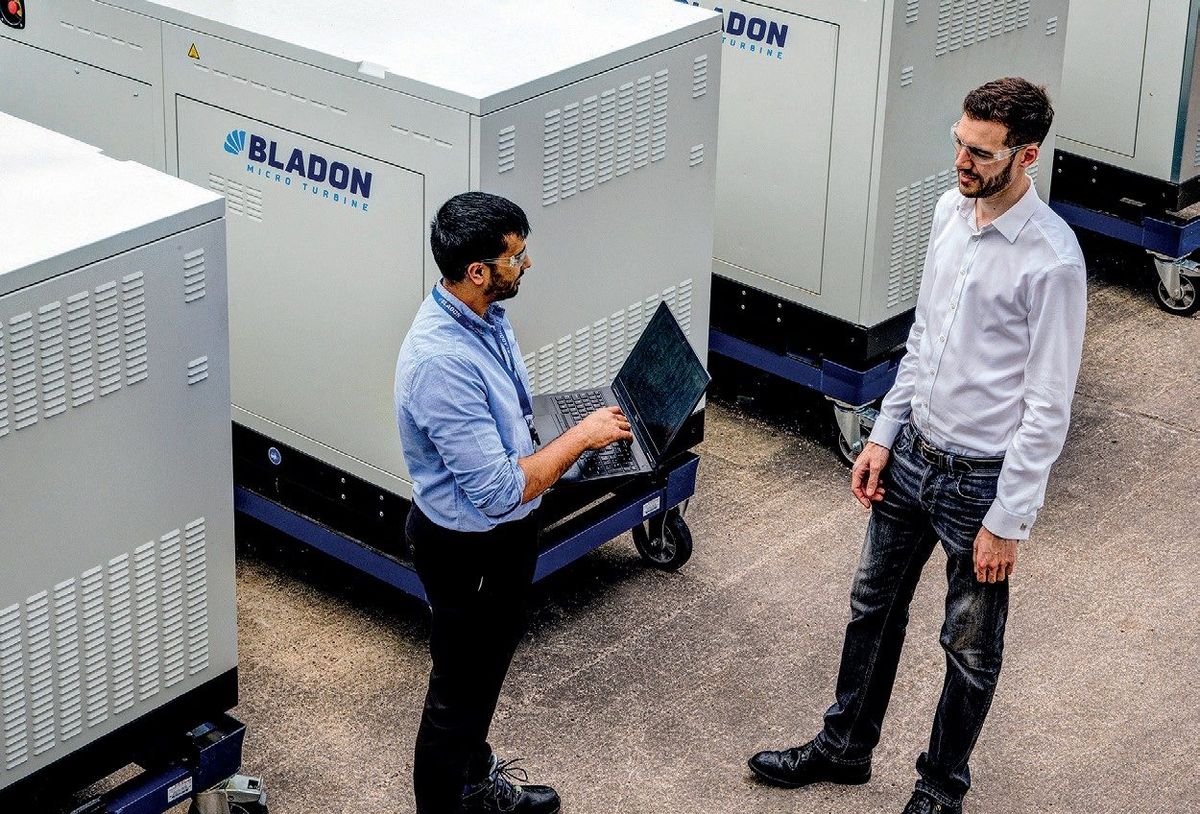
Micro gas turbines offered one route, being capable of running on multiple fuel types rather than being locked to a single hydrocarbon. HVO was a further piece of the answer: it matched diesel's energy density while producing around 90% less CO2, roughly 40% less NOx, and effectively zero particulate matter. Rather than treating renewables and hydrocarbons as opposing camps, the more realistic answer for bad grid telecoms sites lay in combining a right-sized, modular renewable capacity with a cleaner, more flexible form of backup generation to cover the load that solar and batteries could not.
Questions
What is pushing up power at bad grid cell sites in Africa and Asia?
Tower sharing among multiple operators adds 1 to 3 kW of load per tenant, and ongoing growth in data traffic adds further demand, together pushing site power requirements steadily upward.
At what level of grid quality does increased power load start to stretch currently dimensioned sites?
Sites already furthest from reliable grid power, relying most on generators or renewables, have the least headroom and are stretched soonest by any increase in load.
Are cell sites which rely on solar and hybrid systems in danger of overtopping their energy supply with expanding 4G overlay?
Yes. Solar and hybrid systems sized for the load at installation often cannot cover the extra consumption added by a later 4G overlay, forcing greater reliance on backup generation.
Do solarised hybrid sites need re-dimensioning, or are there limits to what cleantech energy sources can achieve?
Re-dimensioning is possible but limited by space, cost and diminishing reliability gains. Globally renewables' share of primary energy consumption rose only from about 12% in 2007 to 13.5% in 2018, underlining the limits of cleantech alone.
When 5G comes to bad grid areas of Africa, how much will this issue worsen?
5G is more efficient per megabyte, but the GSMA projected 400% data traffic growth by 2025 outweighs that efficiency, and 5G equipment can add 2 to 5 kW of load per tower, worsening the power gap.
What would an ideal energy system look like that copes with uncertainty over current and future maximum site loads?
An ideal system extends the modularity already used for rectifiers, batteries, solar PV and antennae to generation itself, so capacity grows with actual measured consumption rather than a fixed forecast.
If the solution is a partial return to generators for primary power, how can hydrocarbon fuels be made cleaner?
Micro gas turbines can run on multiple fuel types, and HVO matches diesel's energy density while cutting CO2 by around 90%, NOx by around 40%, and virtually eliminating particulate matter.
This article is part of the Bladon archive and reflects the position at the date of publication.