
No service visit needed during a trial on an off grid tower in West Africa
A major African mobile network operator ran the Bladon microturbine head to head with a diesel generator at a rural tower site, across three fuel configurations.
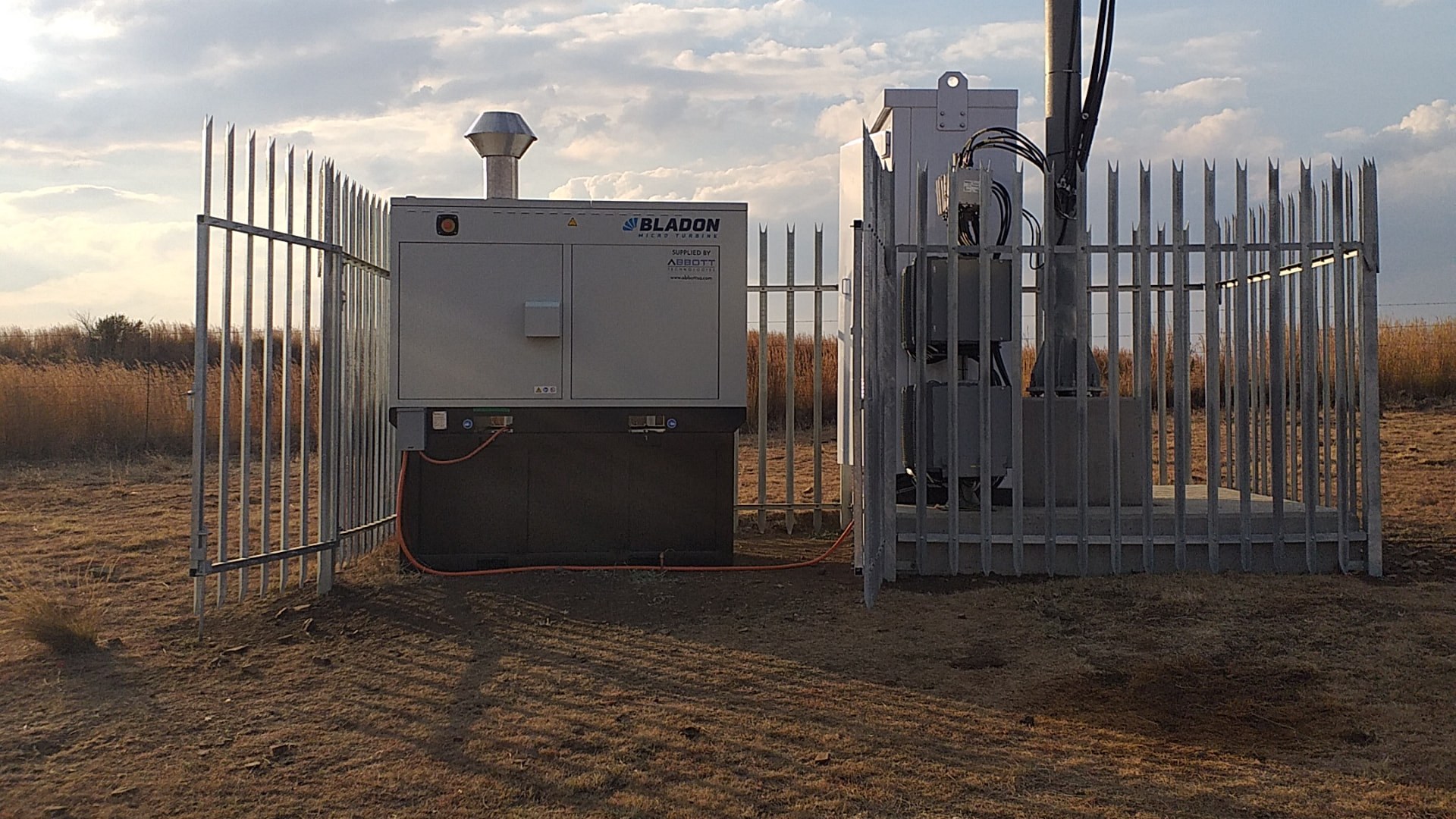
The challenge
The operator runs telecom tower sites across rural and off grid locations where network availability depends entirely on the generator. Diesel gensets at these sites carry high fuel cost, frequent maintenance visits, call out charges and emissions the operator is under pressure to bring down.
Before committing to wider deployment, the operator wanted measured evidence from its own site against its own diesel baseline, covering fuel consumption, emissions, maintenance requirement and total operating cost.
The solution
A Bladon microturbine was installed at a West African tower site and run continuously for six weeks alongside a traditional diesel generator. The trial measured fuel consumption, emissions performance, maintenance requirement and overall operating cost across three fuel configurations: diesel, kerosene and a blend of the two.
Remote monitoring captured performance data and operational metrics throughout, so every result below comes from logged site data over the trial period.
The outcome
The maintenance saving came from removing routine servicing and call outs: $276 per month at a single site. Across a tower estate running into the hundreds or thousands of sites, that figure scales directly. The microturbine needed no service visit at any point during the trial.
On fuel, diesel consumption ran 3% below the diesel generator, with kerosene and blended fuel delivering comparable performance. That matters more than the percentage: the operator can switch to whichever fuel is cheapest or most reliably available at a given site without paying a consumption penalty for the flexibility.
Emissions came in below the diesel baseline on every fuel tested, by 2% on blended fuel, 3% on diesel and 4% on kerosene. The proof of concept confirmed the Bladon microturbine as a viable option for the operator's off grid telecom infrastructure, and the operator is now looking to deploy further units across its wider network.